

Streams of Growth
Understanding the Role, Evolution, and Innovation of Irrigation Systems in Modern Agriculture
The Lifeline of Agriculture
Water is the foundation of all agricultural productivity, and irrigation stands as one of humanity’s most vital inventions. It transforms arid landscapes into fertile fields, sustains crops through unpredictable weather, and secures food for billions of people. Irrigation systems have shaped civilizations for thousands of years, from the flood-fed fields of ancient Mesopotamia to the precision-controlled farms of today. They represent both a technological achievement and a reflection of humanity’s ongoing relationship with nature. As climate change and water scarcity become defining challenges of the century, the evolution of irrigation systems has become not only a matter of efficiency but one of survival.
The importance of irrigation lies in its ability to stabilize food production. Rain-fed agriculture, though natural, is unpredictable and vulnerable to droughts. Irrigation allows farmers to control when and how water reaches crops, ensuring consistent yields even under erratic climatic conditions. Modern irrigation systems also influence soil fertility, nutrient distribution, and crop quality. With careful management, they can enhance productivity while preserving water for future generations. However, improper irrigation practices can lead to waterlogging, salinization, and waste. The balance between innovation and sustainability defines the path forward for irrigation in a warming world.
A Historical Journey Through Irrigation
The story of irrigation begins with the dawn of civilization. Early agricultural societies emerged along rivers such as the Tigris, Euphrates, Nile, and Indus, where natural floods nourished crops. Over time, these communities learned to control water through canals, reservoirs, and dikes. Ancient Egyptians built complex basin systems that captured floodwaters for later use, while Mesopotamians developed networks of channels that supported some of the earliest cities on Earth. In Asia, terraced irrigation in China and the Philippines transformed steep hillsides into productive landscapes, combining engineering with ecological wisdom.
During the Islamic Golden Age, hydraulic engineering advanced further through innovations in water wheels, underground aqueducts known as qanats, and sophisticated distribution systems. The Renaissance brought mechanical pumps that lifted water beyond natural flow limits, paving the way for industrial agriculture. In the modern era, the development of pipes, sprinklers, and pressure-regulated systems revolutionized irrigation efficiency. Today’s technologies integrate sensors, satellite data, and automation, allowing water to be applied with surgical precision. From ancient canals to digital controls, irrigation has evolved from communal labor to a science of optimization and sustainability.
Types of Irrigation Systems and Their Principles
Irrigation systems can be categorized into several types based on their design, method of water delivery, and level of control. Each system reflects a different balance between technology, cost, and environmental suitability. Surface irrigation is one of the oldest and most common methods, relying on gravity to distribute water across the field. Variants such as furrow, border, and basin irrigation remain popular in regions with flat terrain and abundant water. While simple and inexpensive, surface irrigation often suffers from uneven distribution and high water loss through evaporation and seepage.
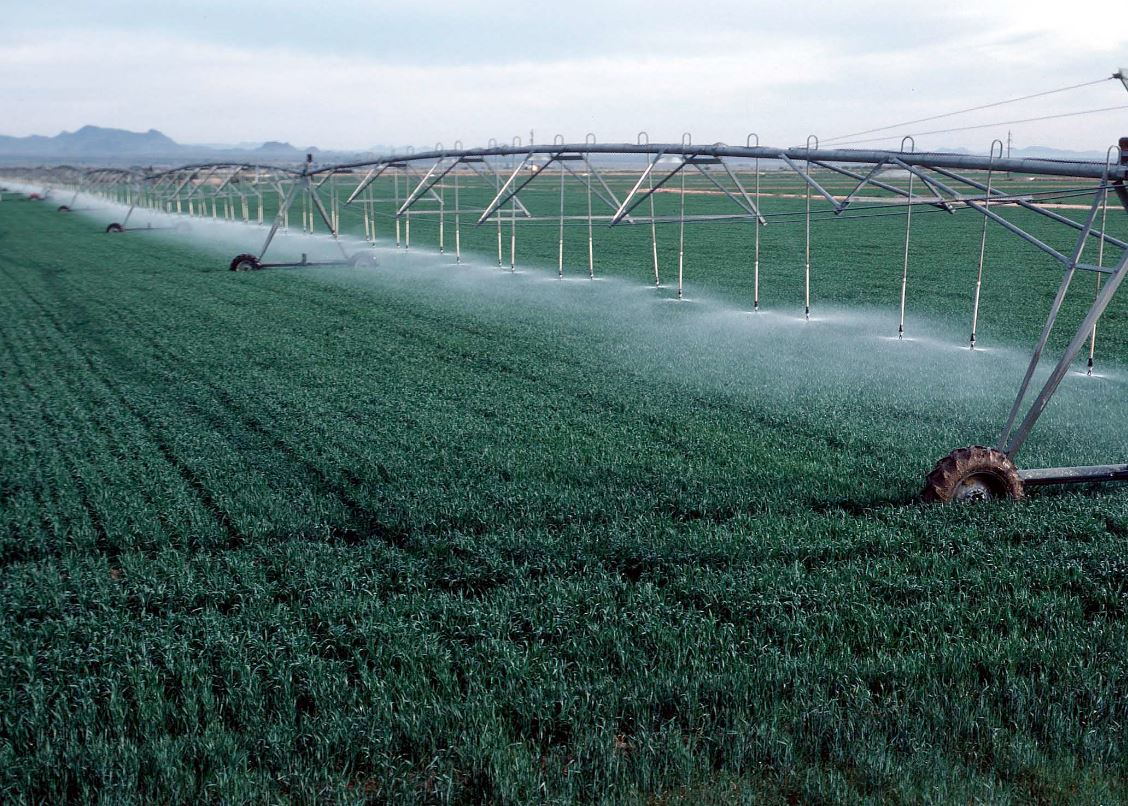
Sprinkler systems, by contrast, simulate rainfall through pressurized pipes and nozzles. They offer more uniform coverage and reduce soil erosion compared to surface methods. Center pivot and lateral move sprinklers are widely used in large-scale farming, forming the iconic circular patterns visible from above. Drip irrigation, also known as micro-irrigation, represents the most efficient form of water delivery. It applies water directly to the root zone through emitters, minimizing loss and maximizing absorption. Subsurface irrigation extends this idea underground, further improving efficiency and reducing evaporation. Each system has its advantages, and the choice depends on crop type, soil condition, climate, and economic resources.
The Science of Water Management in Irrigation
Efficient irrigation is not simply about delivering water but about managing it as a dynamic resource. Understanding soil-water-plant relationships is crucial to achieving optimal irrigation performance. Soils vary in their ability to retain and transmit water, influencing how often and how much irrigation is needed. Sandy soils drain quickly and require frequent watering, while clay soils hold water longer but risk compaction and reduced aeration. Monitoring soil moisture helps prevent both under-irrigation, which stresses crops, and over-irrigation, which wastes water and nutrients.
Modern irrigation science also considers evapotranspiration, the combined process of water loss through soil evaporation and plant transpiration. Measuring evapotranspiration provides insights into the actual water demand of crops under different environmental conditions. Weather-based irrigation scheduling uses real-time data from sensors and meteorological stations to adjust water applications automatically. Nutrient management is another key aspect, as water serves as a carrier for fertilizers in fertigation systems. The precision of modern irrigation depends on understanding these biological and physical interactions, ensuring that every drop serves a purpose and every crop receives what it needs.
Technological Innovations in Irrigation
The twenty-first century has witnessed remarkable advancements in irrigation technology, driven by the need for sustainability and efficiency. Smart irrigation systems combine sensors, artificial intelligence, and data analytics to optimize water use in real time. These systems collect information on soil moisture, temperature, humidity, and crop growth, adjusting irrigation schedules automatically. Internet-connected controllers allow farmers to manage irrigation remotely, reducing labor and improving consistency. Satellite imagery and drone technology also play a growing role, providing large-scale monitoring of crop health and water distribution patterns.
Precision irrigation integrates these tools to deliver water with unprecedented accuracy. Variable rate irrigation systems use field maps to adjust water application within different zones, addressing variability in soil type and crop growth. Solar-powered pumps are expanding access to irrigation in remote and energy-limited regions, while low-pressure systems reduce energy consumption. Additionally, advances in materials science have led to the development of durable, lightweight pipes and emitters that resist clogging and degradation. These innovations demonstrate that irrigation is not a static technology but a constantly evolving field that merges engineering, ecology, and digital intelligence.
Environmental Challenges and Water Sustainability
While irrigation is essential for global food security, it also poses significant environmental challenges. Over-extraction of groundwater for irrigation has led to declining aquifer levels in many regions, threatening long-term sustainability. In some cases, rivers that once flowed year-round now run dry before reaching the sea. Excessive irrigation can also lead to soil salinization, as dissolved salts accumulate when water evaporates. This reduces soil fertility and can render farmland unusable. Poor drainage exacerbates the problem by trapping water and salts near the surface, particularly in arid and semi-arid zones.
Addressing these issues requires a shift toward sustainable water management. Techniques such as deficit irrigation, which applies just enough water to maintain crop yield without waste, can help conserve resources. The use of treated wastewater for irrigation, known as water reuse, offers another promising solution. Reforestation and watershed management can also restore natural water cycles and recharge aquifers. The key lies in integrating ecological principles into irrigation planning, ensuring that the needs of agriculture do not come at the expense of the environment. Sustainable irrigation is not just a matter of technology but of ethics and stewardship.
Economic and Social Dimensions of Irrigation
Irrigation has profound social and economic implications. It supports livelihoods, stabilizes food prices, and fosters rural development. For smallholder farmers, access to reliable irrigation can mean the difference between poverty and prosperity. It enables multiple cropping cycles per year, increasing income and food availability. In regions prone to drought, irrigation systems provide security and reduce migration pressures. However, inequities in access to water and technology often widen the gap between large-scale agribusinesses and small farmers. Addressing this imbalance is crucial to ensuring that irrigation contributes to social equity rather than division.
Community-based irrigation systems, managed collectively by farmers, offer an alternative model that emphasizes cooperation and shared responsibility. These systems distribute water fairly, maintain infrastructure locally, and strengthen community bonds. Financial support, training, and government incentives can further empower smallholders to adopt modern irrigation methods. The social fabric of agriculture depends on the fair distribution of water, as it represents not only a physical resource but a source of dignity and opportunity. When managed equitably, irrigation becomes a catalyst for both economic growth and social cohesion.
Regional Variations and Adaptation Strategies
The design and operation of irrigation systems vary across regions based on geography, climate, and cultural practices. In South Asia, canal irrigation remains a cornerstone of agriculture, while North America relies heavily on groundwater pumping and center pivot systems. Mediterranean regions often use drip irrigation to conserve scarce water resources, while African nations are increasingly adopting small-scale, solar-powered systems. Each region faces unique challenges, from monsoon variability to prolonged drought, and solutions must be tailored accordingly. Local innovation plays a key role in adapting global technologies to specific contexts.
Climate adaptation strategies include the integration of traditional knowledge with modern science. Ancient water-harvesting techniques such as check dams, terraces, and underground cisterns are being revived and combined with modern infrastructure. These hybrid systems enhance resilience by diversifying water sources and storage options. Policies that promote flexible water allocation and climate insurance schemes can also help farmers manage risk. By learning from regional diversity, the global agricultural community can build a more adaptive and resilient irrigation future.
The Future of Irrigation and the Path Toward Resilience
The future of irrigation lies in harmonizing technology, sustainability, and human values. As water becomes increasingly scarce, the focus must shift from maximizing output to maximizing efficiency and regeneration. Emerging technologies such as nano-irrigation, biodegradable emitters, and AI-driven predictive modeling promise to make water management more intelligent and sustainable. However, technological innovation alone will not be enough. Education, governance, and cultural change are equally important in fostering responsible water use.
The next generation of irrigation systems must operate not only within the boundaries of science but also within the ethics of stewardship. Water is more than a resource; it is the essence of life. By embracing integrated approaches that respect both the environment and human communities, agriculture can continue to thrive without depleting the very systems that sustain it. The journey from ancient canals to digital irrigation networks tells a story of progress, but the true success of irrigation will be measured by its ability to secure abundance while nurturing balance. In this pursuit, the streams of innovation must always flow alongside the rivers of wisdom.