The Art of Precision
Precision Farming Is Redefining the Science and Sustainability of Modern Agriculture
The Origins of Precision Farming
Precision farming, often called precision agriculture, represents one of the most significant technological revolutions in modern agriculture. It began as an experiment in the late twentieth century when farmers and scientists realized that not every part of a field produced the same yield. Traditional farming applied uniform treatments across large areas, assuming that soil fertility, moisture, and nutrient levels were consistent. However, research revealed that even small variations in soil quality and topography could lead to substantial differences in crop performance.
This discovery laid the foundation for precision farming, a practice based on managing variability. Rather than treating the field as a single unit, farmers now divide it into smaller, data-driven zones. Each zone receives a customized plan for seeding, irrigation, and fertilization. The goal is simple: to produce more food with fewer resources while preserving soil health and reducing environmental impact. What started as an idea among agricultural researchers has grown into a global movement that is reshaping the way humanity cultivates its land.
Technology as the Backbone of Precision Agriculture
The success of precision farming depends on the integration of technology. Tools such as GPS, drones, and satellite imagery provide farmers with a detailed understanding of their fields. These devices collect data on soil texture, nutrient distribution, and crop health. Once this information is processed, it becomes a digital map that guides farmers in making precise decisions. The same field that once required guesswork now speaks through data, revealing its needs and weaknesses with clarity.
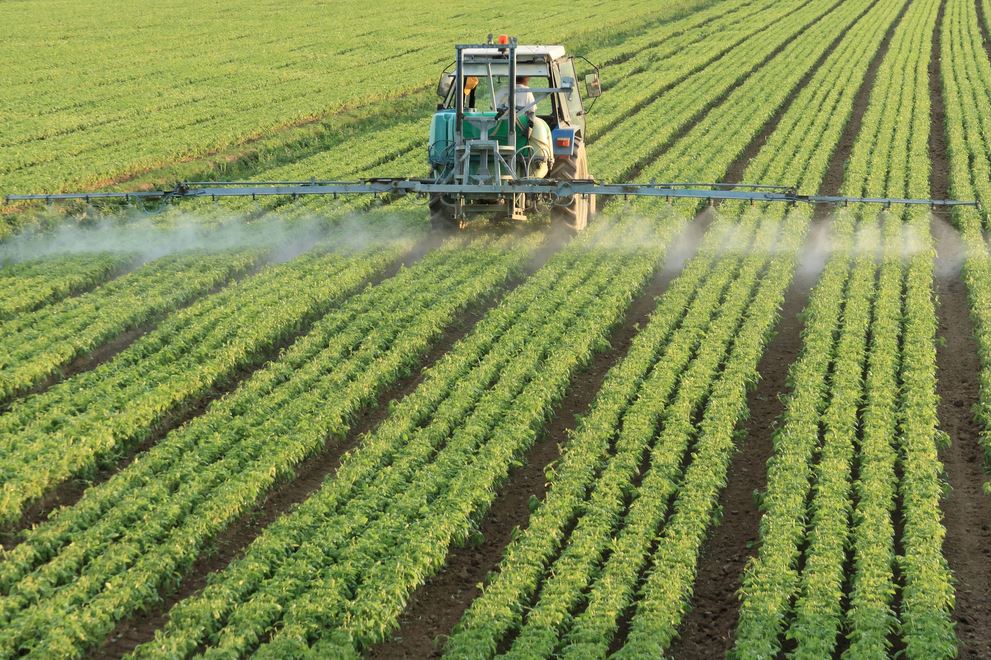
Tractors equipped with GPS and auto-steering systems can navigate fields with centimeter-level accuracy. Sensors monitor soil moisture, ensuring that irrigation systems activate only when necessary. Drones capture real-time aerial images that detect disease, pest activity, or nutrient deficiency before the human eye can perceive them. This technological synergy turns agriculture into a living laboratory where every action is measured, analyzed, and improved. The fusion of data and machinery transforms farming into a science guided by knowledge rather than intuition.
Soil Mapping and Nutrient Management
Healthy soil is the foundation of every successful harvest. Precision farming uses soil mapping to understand its composition and fertility. Sensors and sampling tools measure pH, organic matter, and nutrient levels across different areas of the field. These readings generate color-coded maps that show where the soil needs more nitrogen, phosphorus, or potassium. Instead of applying fertilizer uniformly, farmers can now target specific zones, minimizing waste and preventing chemical runoff into nearby ecosystems.
Variable Rate Technology, or VRT, enables equipment to automatically adjust the amount of fertilizer being applied as it moves through the field. This ensures that crops receive exactly what they need, no more and no less. The benefits extend beyond economics. When fertilizers are used efficiently, greenhouse gas emissions decrease, and waterways remain cleaner. Soil mapping transforms farming from a process of reaction to one of anticipation. Farmers no longer wait for problems to appear; they prevent them by maintaining balance from the very beginning of the growing season.
Precision Irrigation and Water Efficiency
Water is one of agriculture’s most valuable and limited resources. Precision irrigation allows farmers to manage it with care and accuracy. Using soil moisture sensors, satellite data, and weather forecasts, modern systems deliver water only where it is needed. Drip irrigation systems connected to data networks release water at controlled rates directly to the roots of plants, reducing evaporation and runoff. Farmers can monitor these systems remotely, adjusting schedules and flow rates from smartphones or computers.
In arid and semi-arid regions, this technology has become essential. Fields once vulnerable to drought now maintain consistent productivity through smart water use. Precision irrigation not only conserves resources but also promotes healthier crops. Overwatering often leads to root disease and nutrient loss, while under-watering stresses plants. By ensuring the right balance, farmers achieve stronger yields and greater resilience to climate extremes. Water management through precision systems demonstrates how technology can turn scarcity into sustainability.
The Role of Drones and Aerial Imaging
Drones have become the eyes of the modern farmer. Equipped with high-resolution cameras and multispectral sensors, they capture detailed images of fields from above. These images reveal subtle variations in plant health that are invisible at ground level. For example, changes in leaf color or canopy density can indicate stress caused by pests, disease, or nutrient deficiency. By detecting these signs early, farmers can take immediate action to prevent crop loss.
Aerial imaging also supports crop planning and post-harvest analysis. It allows farmers to assess field performance and identify areas that consistently underperform. With each growing season, data accumulates, creating a digital memory of the land’s behavior over time. Drones make it possible to understand agriculture as a dynamic, evolving system rather than a static one. They bring a new perspective that combines art, science, and engineering into the age-old practice of cultivation.
Artificial Intelligence and Predictive Analytics in Farming
Artificial intelligence has expanded the analytical capabilities of precision farming beyond human limits. Machine learning algorithms process thousands of variables to forecast yield potential, disease outbreaks, and weather impacts. AI systems analyze satellite images, soil reports, and historical trends to produce predictions that guide decision-making. Farmers can plan planting schedules, optimize resource allocation, and anticipate risks long before they occur.
Predictive analytics transforms uncertainty into opportunity. For instance, if data suggests that a particular field section will suffer from nutrient deficiency in the next month, corrective measures can be applied in advance. AI also supports global food security by helping researchers model climate impacts on crop production. The same algorithms that guide individual farmers can inform policies for entire regions. Through artificial intelligence, agriculture becomes not only more precise but also more strategic, aligning short-term actions with long-term sustainability.
Economic and Environmental Benefits of Precision Farming
The economic impact of precision farming is significant. By applying resources efficiently, farmers reduce costs while increasing yields. The data-driven approach minimizes waste and maximizes output, creating a model of profitability rooted in sustainability. Precision farming also encourages diversification, allowing smaller farms to compete by producing specialized crops tailored to market demand. The technology reduces dependence on external inputs, making agricultural operations more self-reliant and stable.
From an environmental perspective, precision agriculture represents one of the most effective tools in combating ecological degradation. Reduced fertilizer runoff protects rivers and oceans, while optimized irrigation preserves freshwater supplies. The ability to monitor and control inputs decreases pollution and conserves biodiversity. Precision farming aligns economic success with environmental responsibility, proving that productivity and sustainability can exist together in harmony.
Challenges and the Road to Accessibility
Despite its promise, precision farming faces obstacles that limit its global reach. Many small-scale farmers lack access to the technology or training required to implement data-driven practices. The initial investment for sensors, drones, and software can be prohibitive, particularly in developing regions. Connectivity remains another challenge, as rural areas often struggle with limited internet infrastructure. Without reliable communication networks, real-time data collection and analysis become difficult.
Governments, private companies, and research institutions are working to bridge these gaps. Affordable technologies, mobile-based solutions, and cooperative models are helping farmers share equipment and information. Education also plays a crucial role. Training programs teach farmers how to interpret data and integrate it into their daily decisions. The democratization of precision farming will ensure that innovation benefits everyone, not only large-scale producers. When knowledge and tools become accessible, the world’s smallest farms can achieve the same precision as the largest.
The Future of Precision Agriculture
The future of precision farming lies in integration and intelligence. Emerging technologies such as the Internet of Things, blockchain, and autonomous machinery will further connect every stage of production. Data will flow seamlessly from seed to storage, providing transparency and traceability throughout the food chain. Consumers will know where their food comes from, and farmers will have complete control over how it is produced. This interconnected ecosystem will redefine accountability and trust in global agriculture.
Precision farming is more than a technological advancement; it is a philosophy of respect for the land. It teaches that every field is unique, every resource is valuable, and every decision matters. As the world faces the dual challenges of feeding a growing population and protecting natural ecosystems, precision farming offers a path forward. It transforms agriculture from an act of consumption into an act of stewardship, ensuring that the soil we cultivate today can nourish the generations of tomorrow.